VA Loan Septic and Well Requirements Around Fort Campbell
VA loan septic and well rules near Clarksville, TN, including the 100 foot separation. Call before your inspection deadline closes.
Published by Clarksville Septic & Drainfield, serving Clarksville and Montgomery County, Tennessee. Questions about your own system? (931) 271-5114.
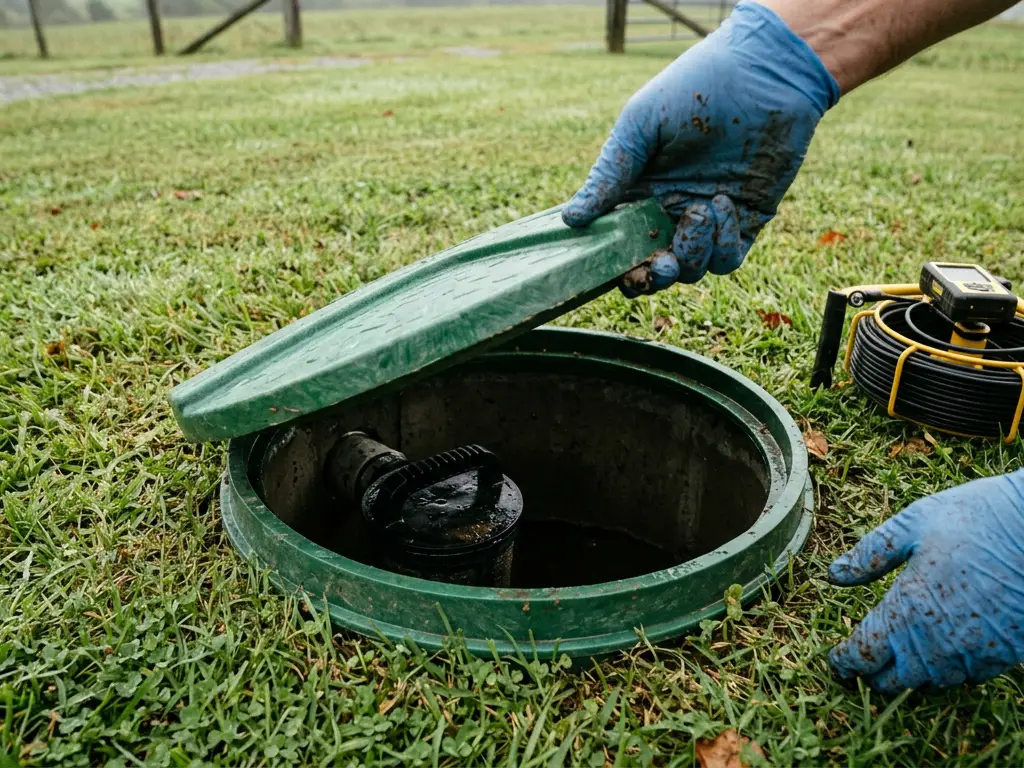
Clarksville has an unusually high share of VA-financed purchases, for the obvious reason: Fort Campbell sits on the county line and a large part of the local buyer pool is entitled to a VA loan. A lot of the rural housing stock those buyers are looking at is on a private well and a septic system.
That combination has requirements attached to it, and they surprise people late in a transaction when there is no time left to deal with them. This is what applies, what it means in practice around Montgomery County, and what to do about it before it becomes a closing problem.
The requirement people hit first: 100 feet
For a property on a private well, VA minimum property requirements call for at least 100 feet between the well and the septic tank and drainfield. Where a shared or public system is involved the distances differ, but 100 feet is the number that governs most rural Clarksville purchases.
This matters because plenty of older properties in this county were built before anyone was measuring that, or were built when the lot was much larger and has since been subdivided. A house with the well fifty feet from the drainfield is not unusual out toward Palmyra, Woodlawn or the Red River corridor.
A separation problem found ten days before closing is a repriced deal or a dead one. Found during due diligence, it is a negotiation with time attached.
What is not automatic
A common misconception is that a VA appraisal automatically triggers a full septic inspection. It does not.
A septic inspection gets required when one of three things happens:
- The appraiser raises a concern, typically because something is visible: wet ground, odour, unusually green growth over the field.
- The lender makes it a condition of the loan.
- A state or local rule requires it. Tennessee has no time-of-transfer inspection law, so this one does not apply here.
That third point is the one worth internalising. Tennessee does not require a septic inspection when a property changes hands. If the appraiser sees nothing obvious and the lender does not ask, a VA purchase of a septic property can close with nobody having opened the tank.
Water testing
A property on a private well will generally need a water quality test, typically covering coliform bacteria, nitrates and nitrites, and lead. The well also needs to deliver adequate flow and be free of obvious contamination risk.
A failing bacteria test on a rural well is not automatically a septic problem, but on a property where the separation distance is marginal it is a reasonable thing to be suspicious about, and on Highland Rim karst it is worth taking seriously. Water in this county can move through limestone fractures and solution channels rather than percolating evenly through soil, which means a contamination path can be much shorter and faster than the distance on a map suggests.
What this means practically in Montgomery County
Measure early
Find the well and find the tank and field, then measure. If nobody knows where the septic system is, that is your first job, not your last. Tank locating runs $150 to $500 and it answers a question that otherwise stalls the deal.
Order the right inspection
If you are buying on a VA loan, order a full septic inspection that hydraulically loads the drainfield, not a visual one. A visual inspection on a vacant house tells you almost nothing about whether the field works, and a field failure discovered after closing is entirely yours. Our page on septic inspections sets out the difference between the two.
Understand the timeline
If the inspection finds a problem that needs a permitted repair, you are into TDEC's process. Tennessee permits septic work through the Department of Environment and Conservation, Division of Water Resources, and Montgomery County is not one of the nine contract counties, so the state handles review directly. That review takes weeks rather than days, and it does not compress because you have a closing date.
Know which areas carry the risk
Separation and system-age issues are concentrated in the older rural stock rather than in newer subdivisions. The parts of the county we cover differ substantially here: newer builds through the Sango corridor generally have documented systems and adequate separation, while properties along the Red River and out toward Indian Mound frequently predate the permitting program entirely.
If the separation distance fails
You have fewer options than you would like, and all of them take time.
- Relocate the drainfield. Possible where the lot has another area that passes a soil evaluation, and this is the reason the reserve area matters. Cost is a field replacement, $9,000 to $18,000 and up.
- Relocate the well. Usually more expensive and not always possible depending on where water is.
- Connect to public water if a line is within reach, which removes the well from the equation entirely. Worth checking before assuming it is not.
- Renegotiate or walk. Which is why you want this information during due diligence rather than after.
The order to do things in
- Get the property under contract with a due diligence period long enough to matter.
- Locate the well, the tank and the drainfield. Measure the separation.
- Order a full septic inspection with field loading, and a well water test.
- Pull the septic permit record from the state if one exists.
- If anything comes back short, price the fix and the permitting timeline before you decide.
None of this is expensive relative to the purchase. A full inspection, a water test and a locate together run well under two thousand dollars on a house costing a couple of hundred thousand. The reason to do it is not the money, it is that the alternative is discovering a five-figure problem with no leverage and no time.
One thing sellers should know
If you are selling a rural Clarksville property and you expect a VA-financed buyer, and the odds here are good that you will, the separation question is going to come up. Knowing the answer before you list is worth more than almost anything else you could do to prepare. A problem you found and priced is a disclosure. The same problem found by the buyer's inspector is a renegotiation.
Questions about your own system? Talk it through on the phone.
Call (931) 271-5114Questions people ask about this
Does the VA require a septic inspection?
Not automatically. It gets required if the appraiser raises a concern, if the lender makes it a condition, or if state or local rules demand it. Tennessee has no time-of-transfer inspection law, so on a Clarksville purchase it often comes down to the buyer asking for one.
How far does a well have to be from a septic tank for a VA loan?
Generally at least 100 feet between the well and the septic tank and drainfield on a property with a private well. Older rural properties in Montgomery County frequently fall short of this, particularly where a larger parcel has been subdivided.
What happens if the separation distance is too short?
The options are relocating the drainfield, relocating the well, connecting to public water if a line is within reach, or renegotiating. All of them take time, which is why this needs finding during due diligence rather than near closing.
Is well water testing required?
On a property with a private well, expect testing for coliform bacteria, nitrates and nitrites, and lead, plus adequate flow. On Highland Rim karst a failing bacteria result is worth taking seriously, because water can move quickly through limestone rather than filtering through soil.
Need this done rather than explained?
Septic Inspection in Clarksville, with a written price before anyone starts work.