Clarksville Septic & Drainfield: Drainfield Replacement in Clarksville, TN
Drainfield replacement in Clarksville, TN. New fields and alternative designs, $9,000 to $28,000. Call to start the process.
- Serving Clarksville and Montgomery County
- Written price before work starts
- We work with licensed, insured local contractors
- Straight answers about what your system needs
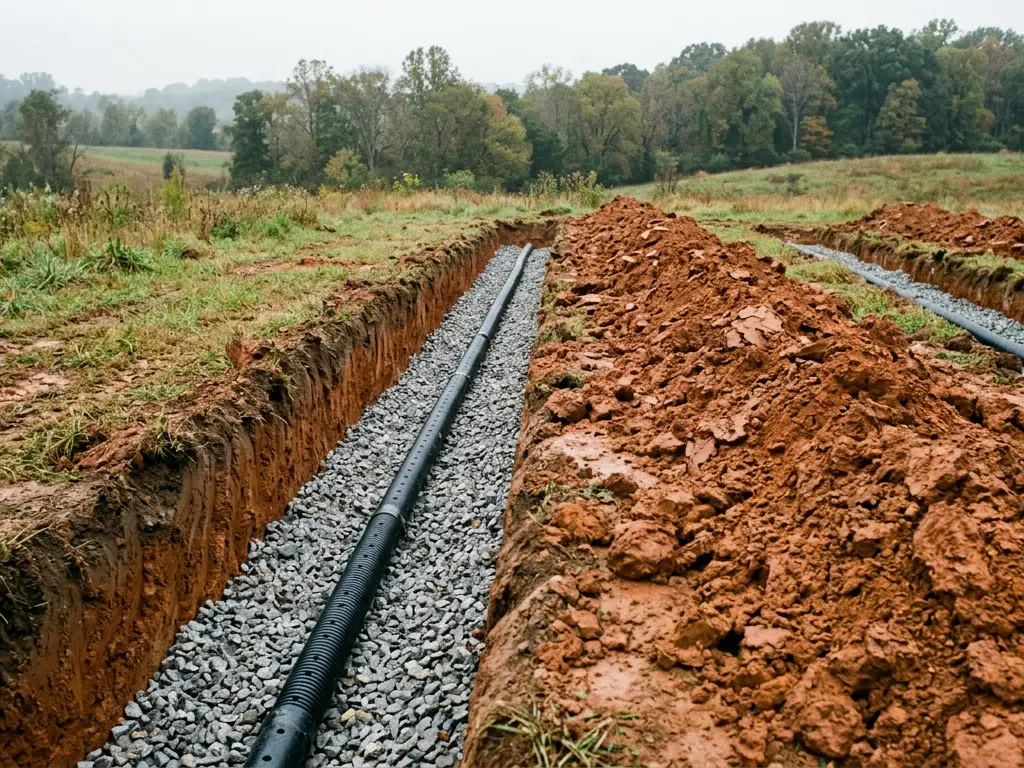
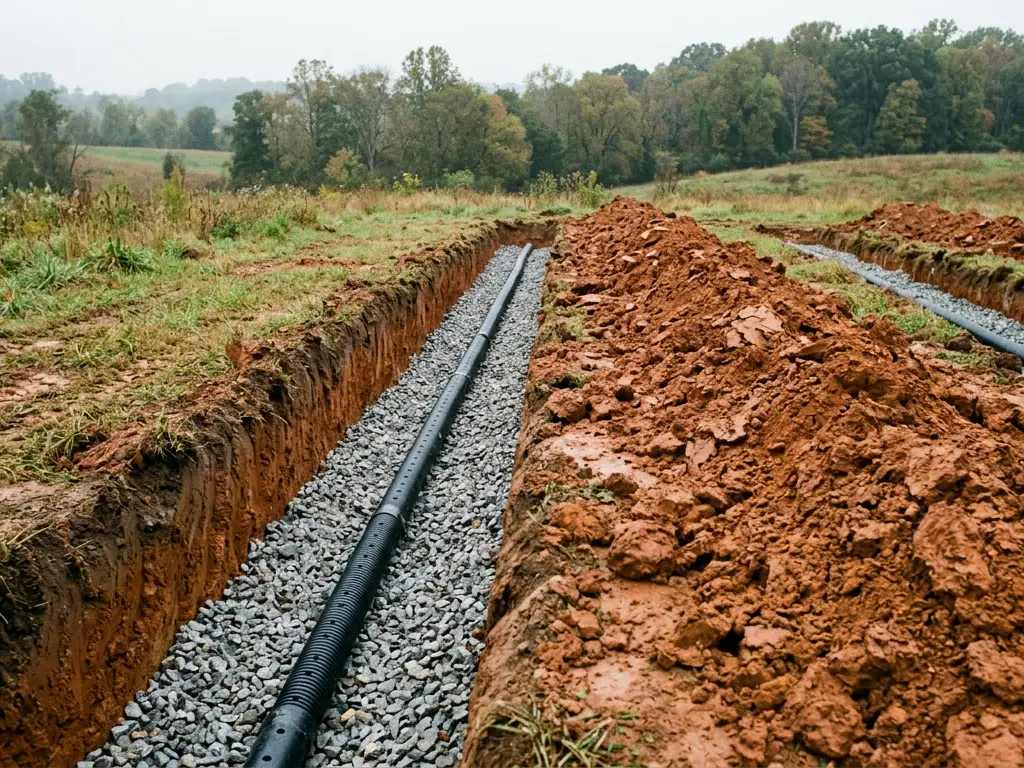
Clarksville Septic & Drainfield connects Montgomery County property owners with installers who replace drainfields that have reached the end of their working life. Replacement is the job everyone hopes to avoid, and it becomes unavoidable when the soil in the existing bed has plugged to the point that it no longer accepts effluent. No repair reverses that. What a replacement involves is a fresh soil evaluation, a new design for either the reserve area set aside at installation or a newly evaluated part of the property, state review, and then construction. It is a permitting exercise before it is a digging exercise, and the timeline reflects that.
Putting a new $14,000 field behind a tank with a broken $500 baffle buys a second replacement instead of twenty years of service.
The reserve area is why placement mattered thirty years ago
A properly permitted system set aside a reserve area for exactly this day. Where that area exists, was recorded, and has been kept clear of driveways, outbuildings and compaction, replacement is comparatively straightforward and the soil is already understood. Where it was never designated, or where somebody built a shop on it in 2009, the replacement starts with finding somewhere else on the property that will pass a soil evaluation. On smaller lots that search sometimes fails, which is how properties end up needing an alternative system at several times the cost.
The new field is only as good as the tank feeding it
The commonest cause of a prematurely dead drainfield is a tank that stopped separating solids, usually because a baffle failed or because nobody pumped it for a decade. Putting a new field on the end of that same tank buys a repeat of the same failure on a shorter timeline. Any replacement worth paying for includes an honest assessment of the tank: baffles, filter, structural condition, and whether it is admitting groundwater. Correcting that first is a small fraction of the field cost and it is what determines whether the new field sees twenty years or five.
A replacement is the chance to size for the house you have now
Systems get inherited, and plenty of them were sized for a smaller house than currently stands on the lot. Additions, finished basements with a bathroom, and extra bedrooms all raise design flow, and a field sized for the original footprint has been running over capacity for years. A replacement designed against the current bedroom count corrects that permanently. It is also the right moment to deal with surface water that has been draining across the field, which is free to fix while the equipment is already there.
Not sure which service you need? Talk it through on the phone.
Call (931) 271-5114What drainfield replacement costs in Clarksville
Replacement cost turns on the soil, the available area and the system type the site will support:
Conventional gravity field replacement in a clear reserve area: $9,000 to $18,000
Replacement requiring a pump and low pressure pipe: $15,000 to $24,000
Mound or drip system where no conventional site remains: $20,000 to $28,000
These are ranges, not quotes. Call (931) 271-5114 and you get a written price before anyone starts work.
How this works in Montgomery County
Permits and who regulates this
A replacement field is permitted work under TDEC's Division of Water Resources, and because Montgomery County is not a contract county the state reviews it directly. A new soil evaluation of the proposed area is part of that process even when the original system was permitted decades ago, because the standards and the site may both have changed. The installer doing the work holds a permit by class under Rule 0400-48-01-.19, and if the replacement is a drip or mound design the installer needs that specific class on top of the Conventional class every permitted installer carries.
Soil, water table and what the ground here does
The practical limit on replacement in this county is usually depth to limestone and the seasonal water table rather than lot size. A site that looks generous on paper can fail a soil evaluation at eighteen inches, and karst features anywhere near the proposed area rule it out entirely because they bypass soil treatment. Where the conventional option is lost, the alternatives are mound systems that build the treatment layer above natural grade or drip dispersal that spreads a small dose over a wider area, and both cost considerably more.
Where the septic properties are
Older properties along the Red River and out toward Palmyra frequently have no recorded reserve area at all, since they predate the requirement. Those are the replacements where the soil evaluation drives the outcome and where the answer occasionally comes back that no conventional site exists on the parcel. Newer subdivisions in Sango and the southeast generally have a designated reserve area on file, which makes the process far more predictable.
If it is backing up right now
Stop running water, keep people and pets away from anything surfacing outside, and call. A pump-out will usually get the house usable within the hour.
Drainfield Replacement questions we get asked
How much does drainfield replacement cost in Clarksville, TN?
Replacing a conventional gravity field into an available reserve area generally runs $9,000 to $18,000. If the design needs a pump and low pressure pipe it runs $15,000 to $24,000. Mound and drip systems, used where no conventional site remains, run $20,000 to $28,000.
How long does the whole process take?
The construction is usually a few days. The soil evaluation, design and state review ahead of it typically take several weeks and sometimes longer. If your system has failed and the house is occupied, start the paperwork immediately rather than waiting on quotes, because the review is the part you cannot compress.
Can the new field go in the same place as the old one?
Generally not. The soil in the failed bed is plugged and needs years out of service to recover, if it recovers at all. That is what the reserve area exists for. If no reserve area was designated or it has been built over, a new area has to be found and evaluated.
What if no part of my property passes the soil evaluation?
That is when alternative designs come in. A mound system builds a suitable treatment layer above natural grade, and drip dispersal spreads a small dose over a larger area at shallow depth. Both are more expensive and both need an installer holding that specific permit class.
Should I replace the tank at the same time?
Not automatically, but it should be assessed. If the tank is structurally sound and its baffles are intact, repairing it is enough. If it is cracked, admitting groundwater, or has crumbling concrete baffles, doing it while the equipment is on site is far cheaper than a separate visit later, and it protects the new field.
Will my homeowners insurance cover this?
Standard policies generally exclude septic failure caused by wear, age or lack of maintenance, which is most failures. Sudden damage from a covered peril is sometimes different. Read your policy and ask your carrier directly rather than assuming either way.
Related work
Septic Tank Pumping
Pricing varies with tank size, depth, access and how long it has been since the last service.
Septic Tank Cleaning
Cleaning costs more than pumping because it takes longer and removes more material.
Septic System Installation
Installation cost is driven by soil, slope, system type and how far the field sits from the house.