
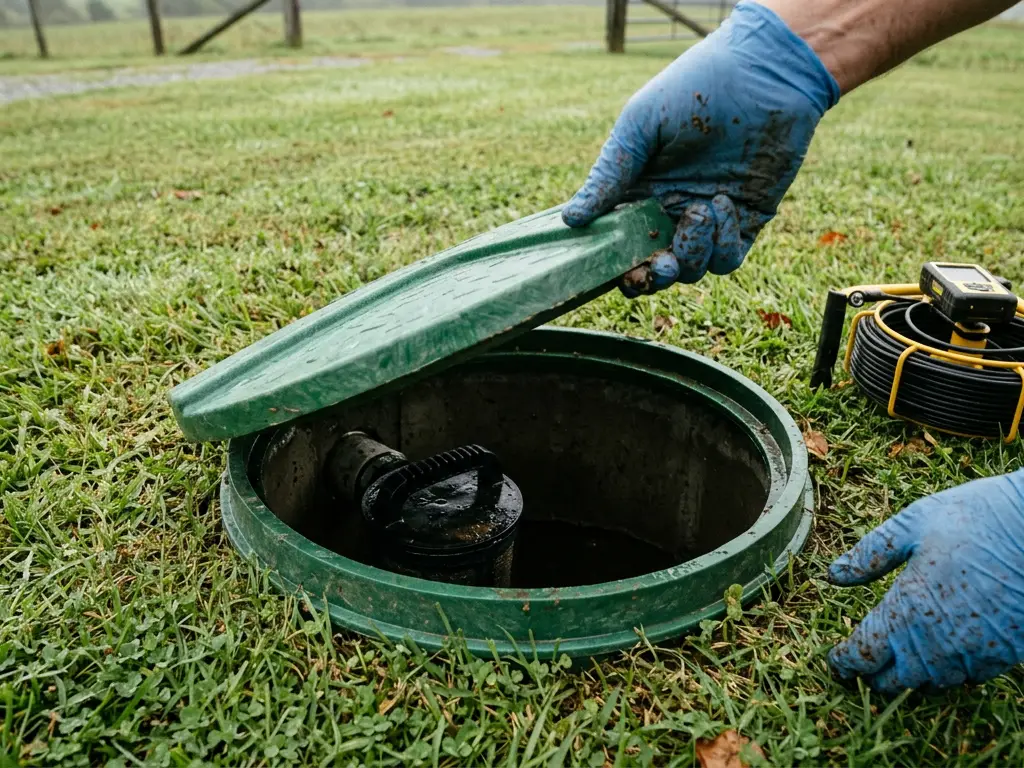
Signs Your Septic Tank Needs Pumping, in the Order They Show Up
The warning signs a septic tank is full or a drainfield is failing in Clarksville, TN, and which mean stop using water now. Call if you see them.
Published by Clarksville Septic & Drainfield, serving Clarksville and Montgomery County, Tennessee. Questions about your own system? (931) 271-5114.
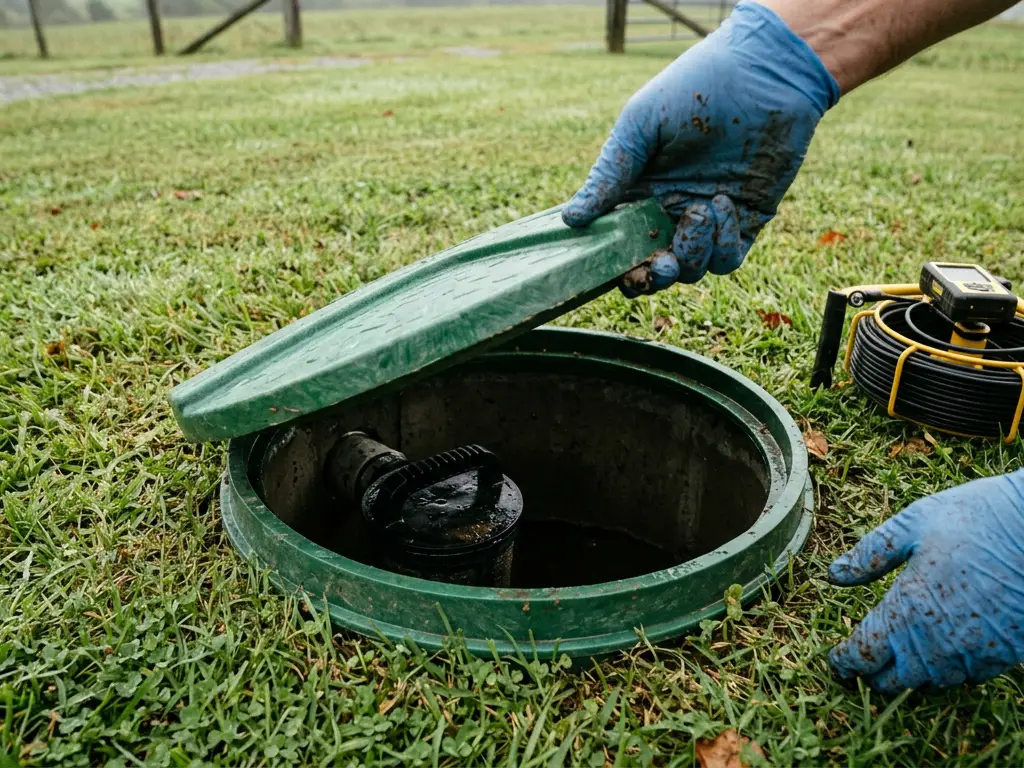
Septic systems fail slowly and then suddenly. The slow part usually runs for months and it is full of signals, most of which get explained away as something else. This is what those signals are, roughly in the order they appear, and what each one is actually telling you.
The early ones, months out
Drains slowing across the whole house
This is the one that matters and it is the one most often dismissed. A single slow fixture is a local blockage in that branch. Several fixtures slowing at once, or the whole house getting sluggish, points at the tank or beyond.
The distinction is worth getting right before you call anyone, because it changes who you need and what it costs. One slow sink is a drain problem. A slow house is a system problem.
Gurgling
Air being pulled back through the trap because water is not leaving freely. Classically you hear it from a toilet or a tub when the washing machine dumps, because that is the largest sudden volume most households produce. It usually shows up before anything actually backs up.
Grass over the drainfield growing differently
Greener, thicker and faster than the rest of the lawn, often in stripes that follow the laterals. Effluent is reaching close enough to the surface that the grass is feeding on it. This is one of the earliest reliable outdoor signs and it frequently appears a year or more before anything goes wrong indoors.
The middle ones, weeks out
Smell outdoors
A sewage odour outside means gas or liquid is escaping where it should not. Where you smell it narrows the problem: strongest at the tank lid suggests the tank or its lid seal, strongest over the field suggests effluent surfacing.
Soft or wet ground in dry weather
Ground over the tank or field that stays soft during a dry week is effluent, not rain. This is a clear signal and it is the point at which a drainfield evaluation is genuinely urgent rather than advisable.
Backups that clear and return
A toilet that backs up, clears after a few hours, then does it again days later. The system is right at capacity: it recovers overnight when nobody is using water, and fails again when normal use resumes. This is the last comfortable warning most systems give.
The ones that mean stop now
Sewage backing up into a tub, shower or floor drain
The lowest fixtures go first because that is where the system relieves itself. Stop using water immediately. Every flush and every load of laundry adds volume to something that has already run out of room, and it is the fastest way to turn a contained backup into a flooded floor.
Effluent surfacing in the yard
Untreated wastewater on the ground is a health matter. Keep children and pets off it, rope it if you can, and do not hose it away, which spreads it and adds water the system cannot take.
A $450 pump-out is what this costs if you catch it at the gurgling stage. At the surfacing stage you are looking at a $9,000 to $18,000 drainfield.
The pattern that means something different
If your problems only appear after heavy rain and settle down in dry weeks, that is a different diagnosis. It usually means groundwater is getting into the system, either through a cracked tank or through a field saturating from below.
This matters locally more than most places. Montgomery County sits on the Highland Rim, where silty clay loam over limestone drains slowly and a perched water table forms above the clay horizon through late winter and spring. A field that copes all summer can fail in a week of March rain without anything about the household changing.
The important part: this frequently gets diagnosed as field failure and treated with a replacement quote, when the actual fix is sealing a cracked tank for a fraction of the cost. If your failures are seasonal, say so, and ask for groundwater entry to be ruled out first. Where your property sits in the county affects this a great deal, because the river bottoms respond far faster than the higher ground.
What none of these tell you
None of these signs distinguish reliably between a full tank and a failing drainfield, and that is the distinction that decides whether you are spending hundreds or tens of thousands. The only way to know is to open the tank and look at the liquid level relative to the outlet.
If the level is at the outlet and the sludge is deep, it is a tank overdue for pumping. If the tank was pumped recently and the level is already back above the outlet, the field is not accepting water and that is a different conversation.
What to check before you call
- When was it last pumped? If nobody knows, assume overdue.
- Is it one fixture or the whole house?
- Does it correlate with rain?
- Has household use changed? More people, a new garbage disposal, a leaking toilet running continuously?
- Do you know where the tank lid is?
That last one is not a diagnosis, it is money. If nobody knows where the lid is, locating and excavating it adds $150 to $250 before any actual work starts.
Questions about your own system? Talk it through on the phone.
Call (931) 271-5114Questions people ask about this
What are the first signs a septic tank is full?
Drains slowing across the whole house rather than one fixture, gurgling when the washing machine drains, and grass over the drainfield growing greener and faster than the rest of the lawn. The outdoor signs often appear a year before anything goes wrong indoors.
Does a slow drain always mean the septic tank is full?
No. One slow fixture while everything else drains normally is almost always a local blockage in that branch. Several fixtures slowing together, or the whole house, points at the tank or the drainfield.
Why does my septic only back up when it rains?
That usually means groundwater is entering the system, either through a cracked tank or a drainfield saturating from below. On Montgomery County clay a perched water table forms in wet months and loads the field independently of the household. Get groundwater entry ruled out before accepting a field replacement quote.
What should I do if sewage backs up into the house?
Stop using water completely, no flushing, laundry or showers, and call for a pump-out. Keep people and pets away from anything surfacing outside. Every gallon that goes down a drain makes it worse.
Need this done rather than explained?
Septic Tank Pumping in Clarksville, with a written price before anyone starts work.